Free weld sample evaluation — send us your part, we test-weld it before you commit.
HomeApplications › Specialty Metals
Applications · Specialty metals

Specialty Metal Welding

Specialty metal welding here covers three families that ordinary steel or aluminum practice does not: reactive metals (titanium, zirconium, tantalum, plus some niobium chemistry), refractory metals (molybdenum, niobium, tungsten) and nickel-based superalloys (Inconel, Hastelloy, Waspaloy). Each family carries a specific failure mode you have to design the process around — oxygen and nitrogen pickup on the reactives, high thermal conductivity plus post-weld embrittlement on the refractories, and strain-age cracking in the HAZ on the superalloys.
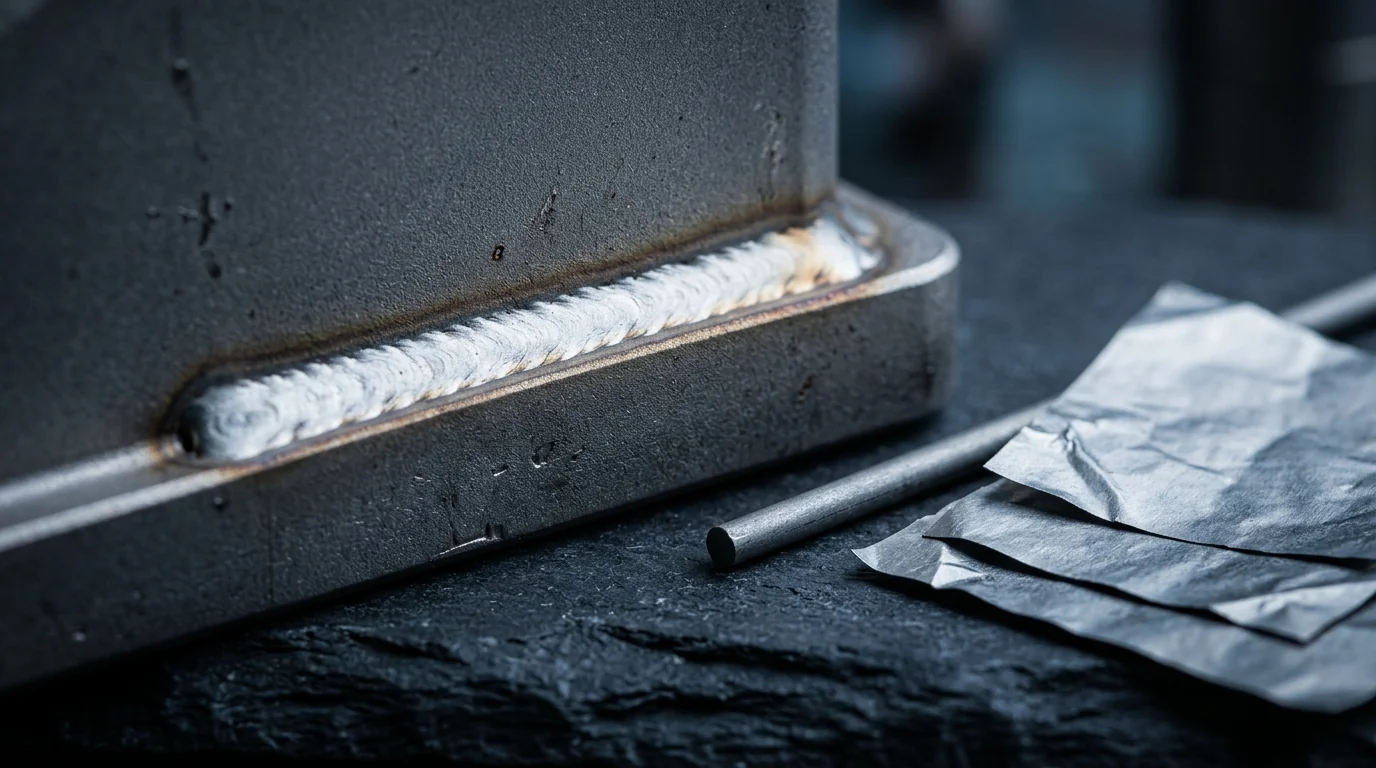
Titanium specialty-metal part with a clean silvery fish-scale weld bead along the base showing proper argon shielding coverage, with a filler wire rod and thin metal foil in the foreground on a dark surface
Typical parts

Typical specialty metal parts and joints

Specialty metal work groups by failure mode rather than industry. The recurring parts and joints:

Process fit

Which process fits specialty metal welding

Laser

Thin-wall reactives, refractory pulses, autogenous joints

Dominant on thin-wall titanium and zirconium fabrication, where low heat input and short interaction time hold oxygen and nitrogen pickup during the pulse itself. Also handles refractory metals well — high energy density completes fusion in a very short window, suiting molybdenum, niobium and tungsten. Autogenous seams stay free of filler contamination, which matters on Ti-6Al-4V joints where filler-alloy matching is not negotiable. See the laser line →

Pulse arc / Micro TIG

Filler-added work on Ti, Ta and superalloy fabrications

The workhorse when filler is needed — repair, build-up, larger cross-section joints on titanium, superalloys and heavier Ti / Ta fabrications. Requires strong inert shielding: an argon or argon-helium trailing shield plus back-side purge on reactive metals, or a controlled-atmosphere chamber for critical work. Matched filler alloy is essential; a mismatched Ti filler on a Ti-6Al-4V joint produces a weld that fails at the alloy interface. See the pulse arc line →

Resistance spot

Narrower fit — Ta / Nb foils, small refractory fixtures

A narrower fit here — occasional foil-and-tab work on tantalum or niobium capacitor foils, and small refractory-metal fixture parts. Parameter windows are tight on these grades, so sample-test on the actual material before committing; resistance-spot behavior on Mo, Nb or Waspaloy does not extrapolate from steel or nickel practice. See the resistance spot line →

Shielding-gas coverage and back-side purge verification belong in the pre-weld setup checklist for reactive metals, not as afterthoughts — a sample weld with a color check on the finished bead (plus a metallographic or mechanical cross-section where the application demands it) is the reliable way to lock the setup before production.

What’s hard

Common difficulties in specialty metal welding

Four failure modes shape most specialty-metal welding programs, each traceable to a physical property that steel or aluminum practice does not have to design around:

Specialty-metal welding is decided on the actual alloy, gauge and shielding plan — parameter windows do not port cleanly across grades. The reliable route is a sample weld on your material with your shielding setup, followed by a color check on titanium (or metallography where the application demands it) as the acceptance step. The evaluation itself is free.

Send a sample for free evaluation