Resistance spotFilament-to-lead-in workhorse
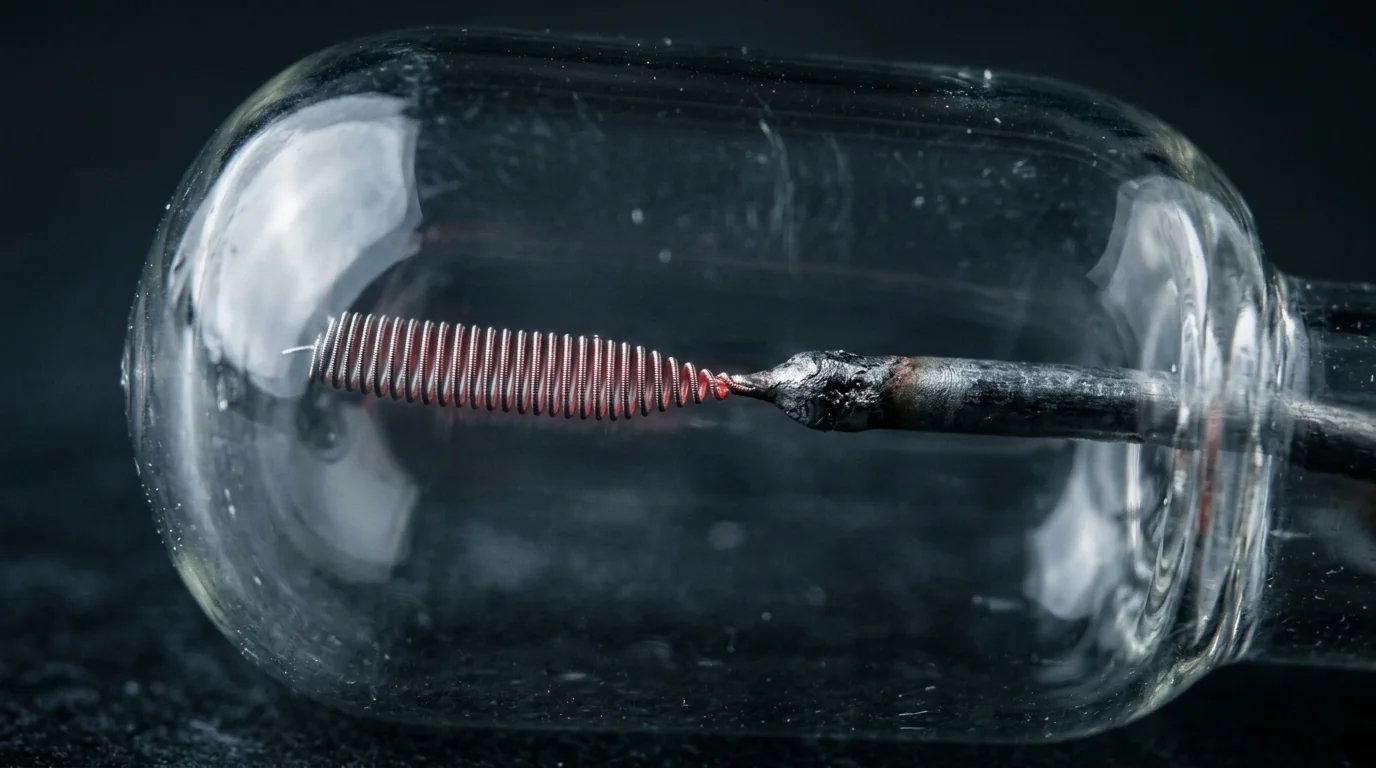
Resistance spot handles the bulk of filament-to-lead-in work. Short-pulse energy tacks fine tungsten filament ends onto molybdenum or nickel lead-in wires on incandescent, halogen and HID stems, and also lands fluorescent cathode-to-lead-wire attach cleanly. Volume runs favor this route because a validated parameter window locks in and repeats over long batches on a fixed lamp design, and the concentrated pulse keeps heat away from the glass stem. See the resistance spot line →
LaserRefractory joints and LED-side welds
Laser earns the difficult refractory joints and most of the LED side of the page. High energy density completes fusion in a pulse short enough to stay ahead of atmospheric oxidation on tungsten and molybdenum, and autogenous seams suit LED bracket leads, heat-slug attach and chip-on-board fixture welds where a filler bead would foul optical or thermal-management geometry. See the laser line →
Pulse arc / Micro TIGLarger cathodes, prototype, repair
Pulse arc / micro TIG covers larger cathode assemblies, prototype and repair on lamp bodies, and heavier lead-frame terminations on lamp bases. Refractory-metal work needs strong inert shielding — argon at minimum, often an argon-helium blend — or the weld pool oxidizes on approach, so plan the shielding coverage as part of the setup rather than as an afterthought. See the pulse arc line →
Refractory-metal parameter windows do not transfer between alloy grades or between filament and electrode form factors — a sample weld on the actual filament or electrode alloy is the reliable go/no-go before parameter tuning starts.